Bamboo Everywhere: Is It Actually Sustainable or Just Really Good Marketing?
- Feb 28
- 4 min read
You’ve probably noticed it.
Bamboo pens. Bamboo cutlery. Bamboo notebooks. Bamboo drinkware.
At this point bamboo is showing up in more places than your morning coffee… and maybe even in your morning coffee (looking at you, bamboo takeaway cups).
So what’s the deal? Is bamboo truly the eco hero it’s made out to be — or is it just the sustainability version of a trend diet?
Let’s talk about it. Pull up a chair.

First Things First… What Is Bamboo?
Surprise: bamboo isn’t actually a tree.
It’s a grass.
Yes — the same plant family as the stuff growing on the side of the road. But this is the overachiever of grasses. Some bamboo species can grow up to 1 metre per day. Imagine planting something on Monday and by Friday it’s taller than your teenager.
Because of this ridiculous growth speed, bamboo is considered one of the fastest renewable materials on Earth.
Which is exactly why product designers love it.

Why Bamboo Is Considered Sustainable
Here’s why bamboo gets invited to every sustainability conversation:
1. It grows insanely fast
No waiting 20–40 years like hardwood trees.Most bamboo used for products is ready to harvest in 3–5 years.
And here’s the clever part — when bamboo is cut, the plant doesn’t die.It regrows from the same root system.
No replanting.
No soil disturbance.
No deforestation.

2. It drinks less water
Bamboo generally grows using natural rainfall and doesn’t need heavy irrigation systems.
That means less pressure on water resources.
3. It absorbs a LOT of carbon
Bamboo is basically a carbon vacuum cleaner.
It absorbs more CO₂ and releases more oxygen than many trees of similar size. So while it’s growing, it’s actively helping the atmosphere — not just sitting there looking pretty.
4. It replaces plastic beautifully
This is the big one in the promotional products world.
Plastic products = fossil fuels + long life in landfill
Bamboo products = renewable plant material + lower impact manufacturing
And let’s be honest… bamboo also just looks nicer. Natural texture beats shiny plastic every time.
How Bamboo Products Are Made
(Short version: it’s not just chopping a stick and calling it a spoon.)
Here’s the simplified journey:
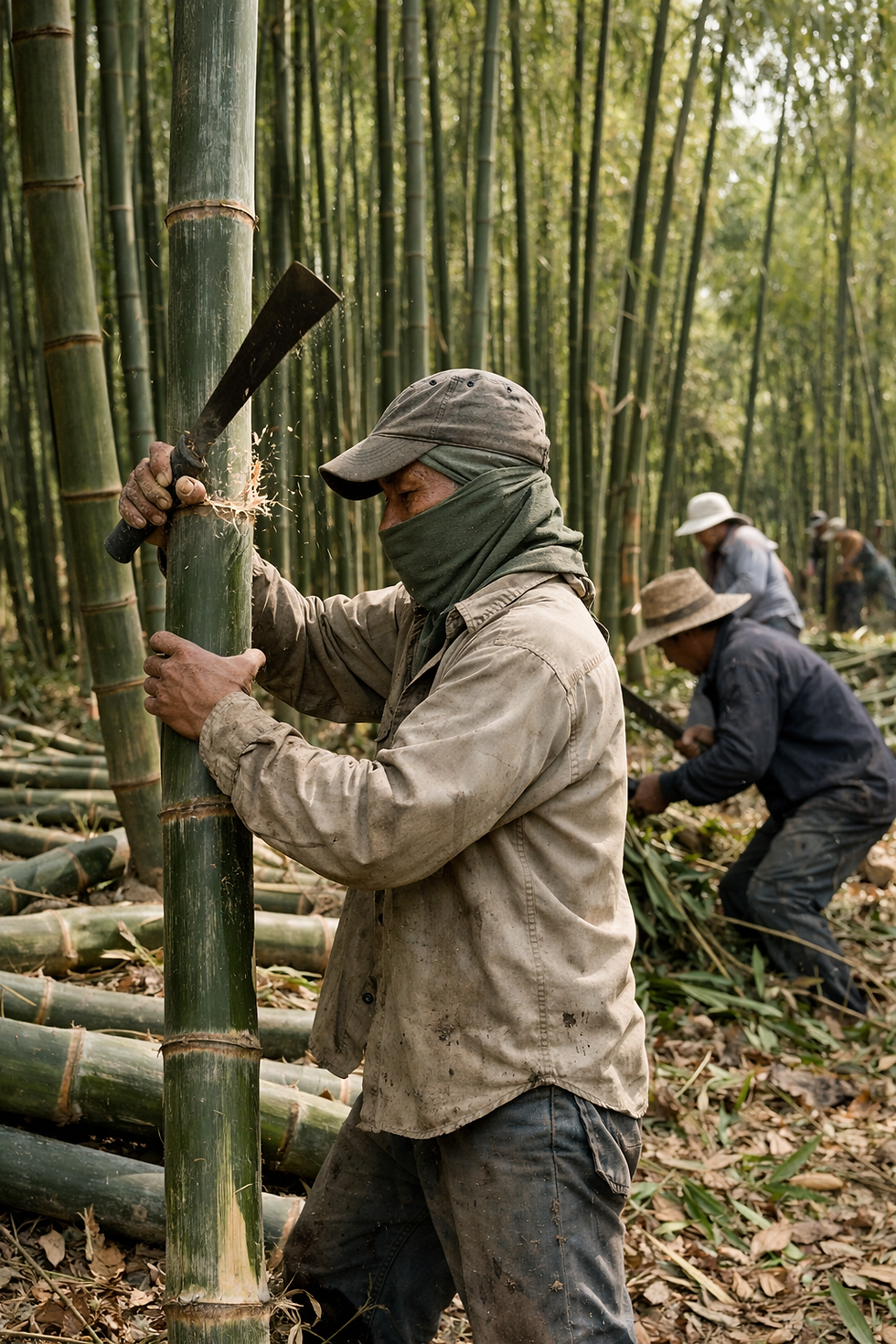
Bamboo stalks are harvested
The outer skin is removed
The material is cut into strips
It’s dried (very important to prevent cracking)
It’s compressed or shaped into moulds
Sanded and polished
Finished with natural oils or coatings
For items like pens, power banks, or speakers, bamboo is used as the outer casing, while the internal parts are still electronic or metal.
So bamboo doesn’t magically make electronics biodegradable — but it does significantly reduce plastic use and petroleum-based materials.

Can You Recycle Bamboo Products?
Good question — and this is where many people get confused.
Bamboo isn’t recycled the same way plastic or glass is.
Instead:
Pure bamboo items
(Like cutlery, chopsticks, or utensils)
These can:
• Be composted
• Break down naturally over time
• Be repurposed (garden markers, plant supports, craft projects)
Composite bamboo products
(Like bamboo + resin pens or electronics casings)
These can’t go into green waste, but they:
• Last much longer than plastic
• Reduce virgin plastic use
• Create lower overall environmental impact
In other words: bamboo works best as a long-use material, not a throwaway one.
Where Does Most Bamboo Come From?
The world leader: China
It produces the majority of bamboo used in consumer products globally. Bamboo has been part of daily life there for thousands of years — construction, tools, furniture, cooking, even paper.
Other major producers include:
• Vietnam
• India
• Indonesia
In many regions bamboo is considered a “people’s material” — affordable, renewable, and incredibly versatile..
Why Bamboo Works So Well for Promotional Products
Here’s the real reason you’re seeing it everywhere:
Bamboo solves one of the biggest problems in promo merchandise — usefulness + perception.
A plastic pen is forgettable.
A bamboo pen feels intentional.
Bamboo products:
• Look premium
• Tell a sustainability story
• Encourage people to keep them
• Align brands with conscious choices
And the longer a promo product stays in use… the better the branding works.
👉 You can view our Top 15 Bamboo Product Collection here: 15 Bamboo Items

Fun Bamboo Facts (You’ll 100% Repeat Later)
• Bamboo has been used as scaffolding for skyscrapers in Hong Kong
• Pandas eat up to 38kg of bamboo a day
• Bamboo can be stronger than some steels in tensile strength
• Bamboo was used to make the world’s first fireworks
• Some cultures call it the “friend of the people” because every part is useful
And yes… technically you could eat the shoots from some species.
(No, please don’t snack on your bamboo pen.)
So… Is Bamboo Worth It?
Bamboo isn’t perfect — no material is.
But as a renewable, fast-growing, lower-impact alternative to plastic and slow-growing hardwoods, it’s one of the best options currently available for everyday promotional products.
The real sustainability win?
Choosing products people actually keep and use.
Because the greenest product is the one that doesn’t end up in the bin after a week.
So next time you see bamboo on a product, it’s not just aesthetic.It’s a small material choice that makes a big difference.
And honestly… it looks pretty good too.

Comments